HG Firearms
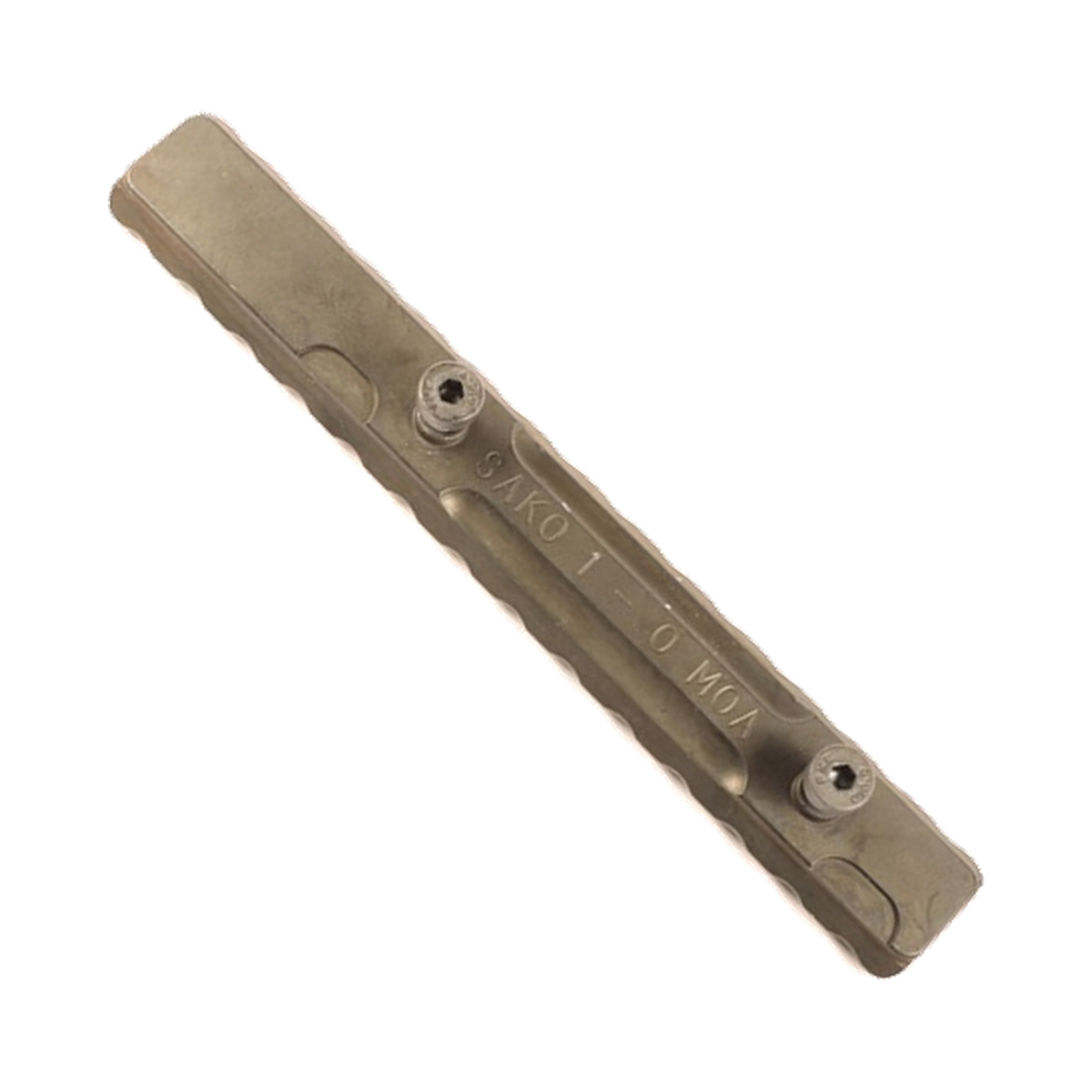
Sako 85 System 1 Picatinny Rail
Sako 85 System 1 Picatinny Rail
Steel - QPQ
Couldn't load pickup availability
This Picatinny rail fits:
Sako 85 System 1
May also fit: Sako 75 System 1
Note: Screws not included. This rail mounts on original Optilock bases, which are not included. Check that the rifle is System 1.
Specifications:
| Manufacturer HG Firearms is the manufacturer of this picatinny rail. Read more | HG Firearms |
| Material The material affects weight, wear resistance, and application. Read more | Steel |
| Surface treatment QPQ is a surface treatment that increases wear resistance and corrosion resistance. Read more | QPQ |
| MOA MOA indicates the rail's incline and can provide more elevation adjustment in the scope. Read more | 0 MOA, 10 MOA, 20 MOA |
| Screws | MC5 Low Head screws, included |
| A/B/C measurements A/B/C measurements are used to check hole spacing and fit before purchase. Read more | 68.40 / N/A / N/A mm |
| Length | 145 mm |
This is included in the package
1 pc. Picatinny rail and MC5 Low Head screws.
MOA
MOA
MOA stands for Minute of Angle and indicates the rail's incline. An angled rail compensates for bullet drop over distance by tilting the scope slightly forward. This gives you more elevation adjustment in the scope's turret – if you need to shoot very long distances.
For most shooting range and hunting scenarios, 0 MOA (flat rail) is more than sufficient. If you are shooting at longer distances or using a scope with limited elevation, 10 or 20 MOA can give you the extra margin you need.
Read more in our article: What is MOA, and when do you need it?
Material
Material
This rail is made of steel, which remains the classic choice for both mounts and Picatinny rails. Steel has high rigidity and is extremely durable. The material can withstand repeated mounting and dismounting without the contact surfaces deforming.
Steel is heavier than aluminum, but for a Picatinny rail, the weight difference is practically minimal – typically less than 50 grams.
Read more: Steel vs. aluminum – which is best for your rifle?
Surface treatment
Surface treatment
This rail is QPQ (Quench-Polish-Quench) treated. QPQ is a salt bath nitriding process that creates an extremely hard and corrosion-resistant surface. The treatment penetrates the steel and is not merely a coating – even deep scratches still reveal treated material.
QPQ provides a matte, black finish and is the most durable surface treatment for steel rails and steel mounts. A QPQ-treated rail requires minimal maintenance and can withstand heavy use in all weather conditions.
Read more: QPQ treatment – what is it and why is it important?
Mounting
Mounting
Mounting this rail is quick and easy. The rail is attached directly to the rifle's receiver with the included screws.
Manufacturer's recommendation:
- Tightening torque: 3.5 Nm
- Apply oil to the screws (NOT threadlocker)
- Tighten the screws in a criss-cross pattern for even distribution
A torque wrench is necessary for proper installation. Overtightening can damage the threads in the receiver.
Read more: Mounting a Picatinny Rail – complete guide
Fire
Fire
Rails and mounts from HG Firearms are designed and custom-made in Denmark. The primary material is steel, and no compromises are made. They are known for precision-manufactured steel rails with QPQ surface treatment, which provides maximum durability and corrosion protection. HG Firearms covers a wide range of rifle platforms with a focus on quality and fit.
Read more about HG Firearms here:HG Firearms
See all products from HG Firearms:HG Firearms Collection
Compatibility
Compatibility
This rail is manufactured according to NATO STANAG 2324 / MIL-STD-1913 standard (Picatinny). This means it is compatible with all standard Picatinny mounts, rings, and accessories – regardless of manufacturer.
The Picatinny standard ensures that you can freely combine rails, mounts, and optics from different manufacturers. This gives you the flexibility to upgrade or change scopes without changing the rail.
See compatible mounts: Scope Mounts
Share